





Forget The Director, This Is Emmy’s Cut! is set to make its world premiere at the International Film Festival Rotterdam (IFFR), one of the world’s most respected platforms for bold and forward-looking cinema. The film will screen on January 30 and February 1, 2026, marking a significant international moment for a cinematic voice deeply rooted in Ugandan popular culture and alternative storytelling traditions.
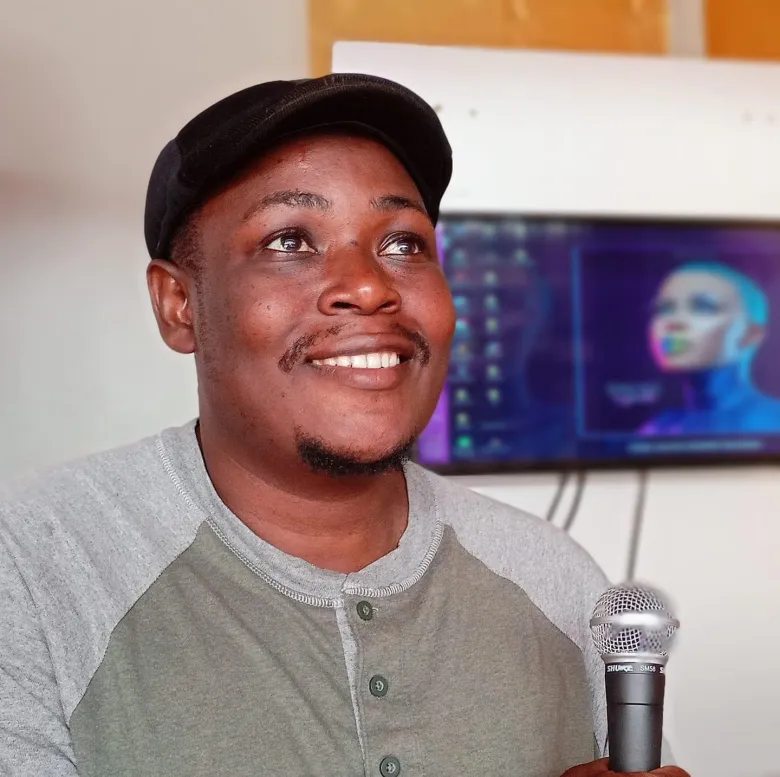
Directed by French filmmaker Marion Desmaret, the film explores the electrifying world of VJ Emmy, Uganda’s most celebrated Video-Joker. Though he has never appeared on screen, Emmy has become one of the country’s most recognizable film figures through his live narration, translation, satire, and cultural commentary — a practice that has shaped how cinema is consumed and understood across Uganda and East Africa.
In the region, VJ-ing, also known as Video-Jokering, is far more than a translation tool. It is a long-standing storytelling tradition in which imported films — from Hollywood action blockbusters to martial arts classics — are performed live or dubbed with real-time interpretation, improvisation, humour, and political insight. Through this process, global cinema is reclaimed and rewritten, transformed into local narratives that reflect lived realities, social tensions, and communal values.
VJ Emmy stands at the forefront of this cultural form. Moving seamlessly between Luganda and English, he reimagines films with sharp wit and unapologetic social critique, collapsing the boundaries between entertainment and commentary, fiction and reality. His voice acts as both guide and disruptor, drawing audiences into a participatory cinematic experience that is as communal as it is subversive.
Forget The Director, This Is Emmy’s Cut! does not treat this practice as a subject to be observed from a distance. Instead, it fully embraces VJ-ing as cinema in its own right. Blending vérité documentary, stylized fiction, and layered narration, the film unfolds within Kampala’s fading kibandas — informal neighborhood cinemas constructed from wood, speakers, and collective imagination. Once central to both urban and rural social life, these spaces are gradually disappearing under the pressures of economic change and digital consumption.
When Emmy steps into one such kibanda, microphone in hand, the atmosphere transforms. For a brief moment, cinema reclaims its communal power — loud, physical, participatory, and alive. Desmaret captures this not as an exercise in nostalgia, but as a statement of urgency. Rather than positioning herself as the authoritative voice, the director relinquishes control, allowing Emmy to narrate not only the films on screen, but his own image, his city, and the film itself. The result is a work that deliberately rejects hierarchy, asserting authorship from within the culture it represents.
Marion Desmaret’s background reflects a long-standing commitment to voices operating outside dominant narratives. Based between Uganda, France, and Germany, she began her career at ARTE before working independently across documentary, reportage, and experimental film. Her work has included interviews with global figures such as Al Gore, Depeche Mode, and Michèle Lamy, while consistently maintaining a focus on countercultures and socially transformative movements. In 2022, she directed a documentary on Uganda’s Nyege Nyege Festival and continues to collaborate closely with Kampala-based cultural collectives.
The film’s selection for a world premiere at IFFR affirms its relevance within contemporary global cinema. Known for championing experimental, politically engaged, and boundary-pushing work, the festival provides a fitting home for a film that challenges conventional ideas of authorship, translation, and cultural ownership. At its core, the film poses a deceptively simple yet disruptive question: who owns the story?
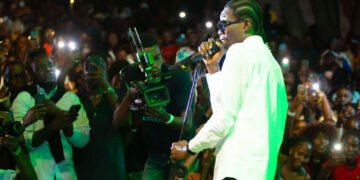
Extending beyond the screen, VJ Emmy has also been invited to perform a live VJ session during the festival. In this rare appearance, audiences in Rotterdam will experience his practice in its original, performative form. Translating, interrupting, remixing, and re-authoring images in real time, Emmy transforms the screening into a collective event that blurs the lines between cinema, oral storytelling, and stand-up performance.
Together, the film and live performance position Forget The Director, This Is Emmy’s Cut! not merely as a cinematic work, but as a living tradition — one that continues to redefine how stories are told, shared, and reclaimed across cultures.