






A high-level engagement between Pearlwood, an umbrella body for local filmmakers and the National Association of Broadcasters has set the stage for renewed efforts to strengthen collaboration between local filmmakers and broadcasters, with a focus on improving the visibility and viability of Ugandan film content on Ugandan television.
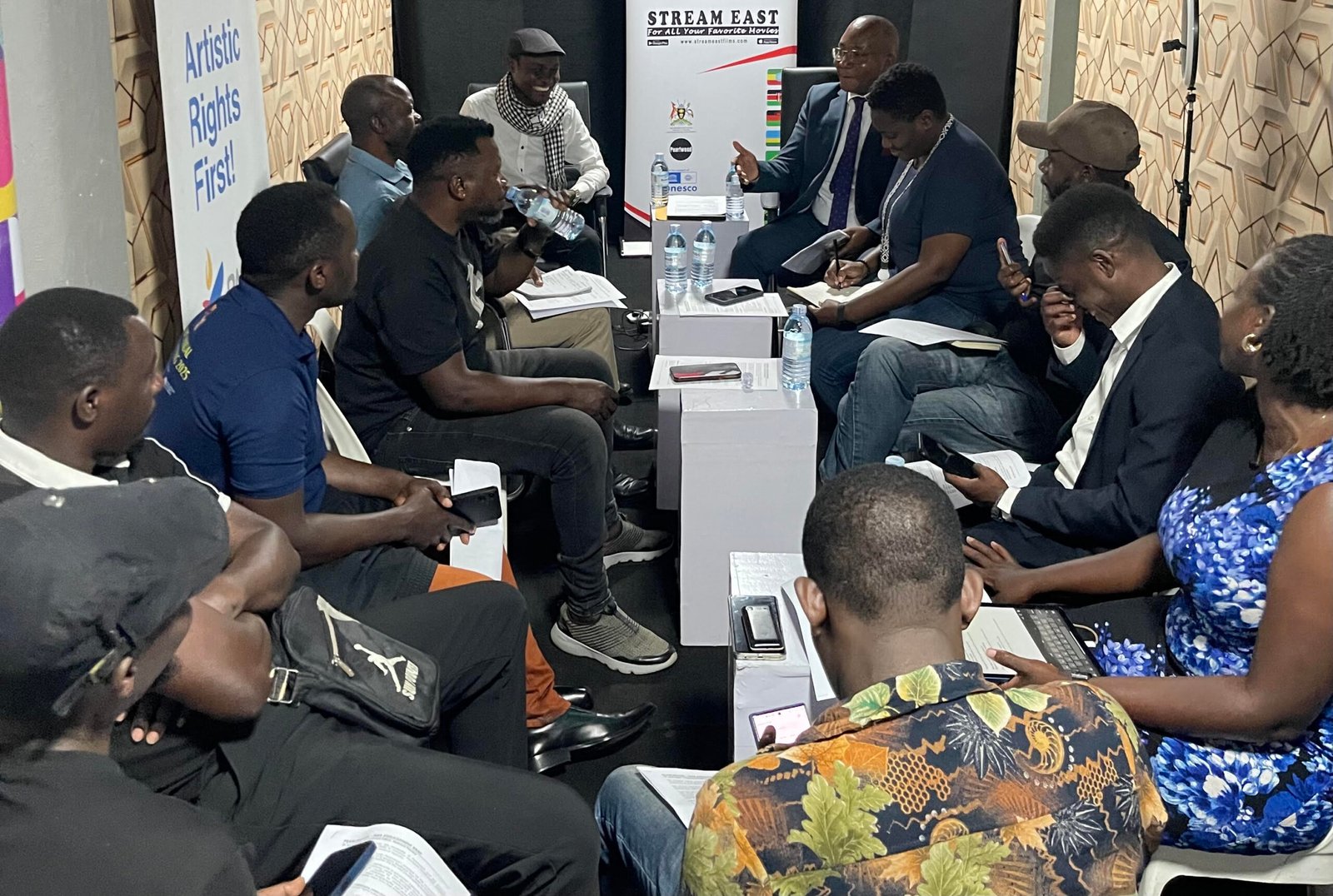
The meeting, held at thePearlwood offices in Kampala, brought together key industry leaders including NAB Chairman Dr. Innocent Nahabwe, CEO Joseph Beyanga and their legal team. Pearlwood was represented by its General Secretary Julius Bwanika and a few members alongside officials from the Uganda Federation of Movie Industries (UFMI), the film Collecting society represented by their CEO Robert Womai.
At the heart of the discussions was a proposal by Pearlwood seeking a structured arrangement through which Ugandan films can be acquired and broadcast across local television stations. Broadcasters welcomed the conversation but raised concerns about the current state of local film content, particularly the limited volume of productions available for broadcast and the need to significantly improve quality to meet competitive industry standards. Participants noted that many local films still struggle to match the technical and storytelling benchmarks required for television, making it difficult for broadcasters to confidently programme Ugandan titles alongside international content.
Regulatory compliance also emerged as a key issue, with emphasis placed on the need for all films to undergo classification by relevant authorities before they can be aired. Stakeholders acknowledged that the process remains a challenge for many producers and called for more streamlined engagement with regulators to ease the burden while maintaining standards.
Discussions around licensing and pricing revealed differing perspectives, particularly on the proposal for blanket rates for film acquisition. Broadcasters expressed reservations about adopting uniform pricing across all content, arguing that audience demand varies widely and directly impacts the commercial value of films. In response, both sides explored more flexible models, including standardised licensing frameworks that can accommodate different categories of content, as well as revenue-sharing approaches tied to actual earnings from broadcasts. There was also consensus on the need to introduce accessible entry-level rates that could encourage broadcasters to take on more local content in the early stages of the partnership.
Beyond traditional licensing, the meeting also highlighted opportunities for innovation in revenue generation, particularly through product placement and brand integration within films. Broadcasters indicated willingness to provide platforms that could amplify such opportunities, noting that this approach could unlock additional income streams for filmmakers while enhancing the commercial appeal of local productions.
A recurring theme throughout the engagement was the need for stronger organisation within the film industry. Broadcasters called for a more coordinated system that clearly defines content ownership, licensing rights and authorised representatives, in order to simplify negotiations and build trust across the sector. In response, UFMI reiterated its role as a collective management organisation and pointed to ongoing efforts to register works and represent filmmakers more effectively in licensing processes.
The meeting concluded with a shared commitment to formalising the outcomes into a working framework that will guide future collaboration. Stakeholders agreed on the importance of compiling a verified catalogue of films and producers, engaging regulators on classification challenges and convening a broader industry meeting that will include additional players and government agencies. There was also agreement on adopting a phased approach, with an initial implementation period that will allow both sides to test and refine the proposed models.
The engagement signals a growing recognition of the need for alignment between Uganda’s film and broadcast sectors, as industry players seek sustainable ways to grow local content and ensure it reaches wider audiences.